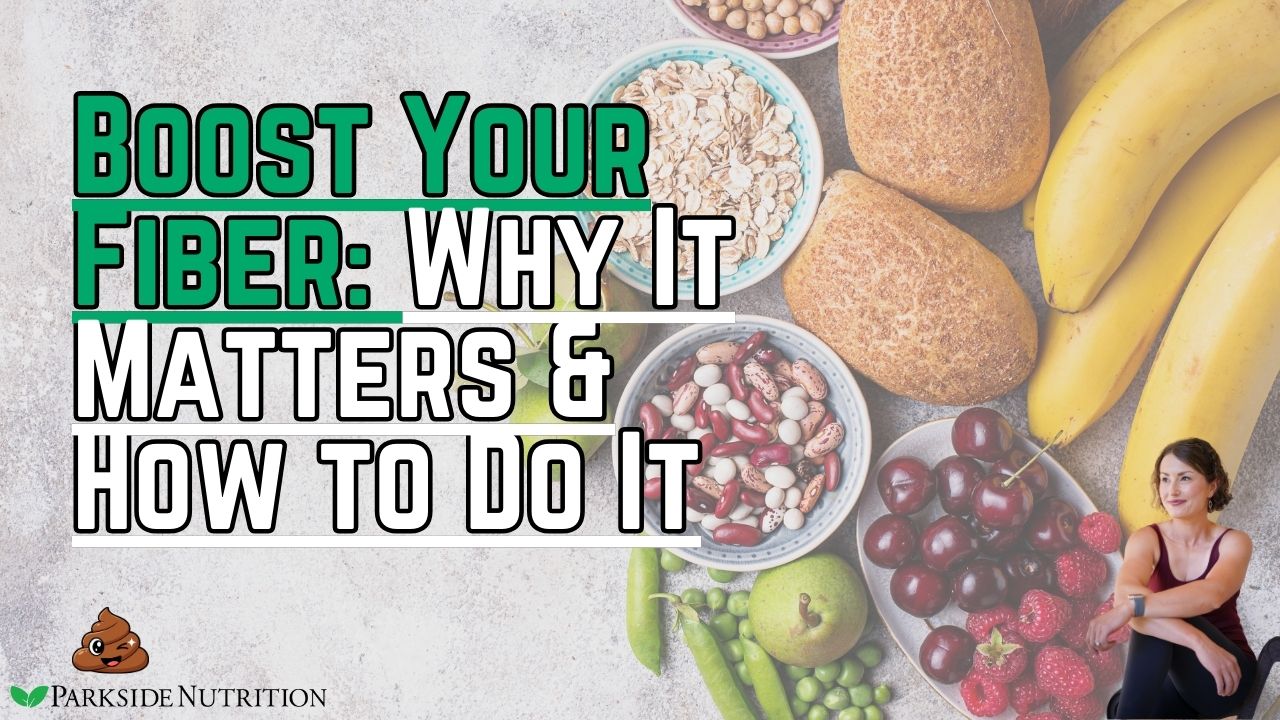
Boost Your Fiber: Why It Matters and How to Do It
Fiber isn’t just a trendy health buzzword—it’s essential for your digestive health, blood sugar balance, and heart health. Most people fall short of the recommended daily intake, but the good news is, adding more fiber is easier than you think.
Why Increase Fiber?
Supports digestion: Fiber adds bulk to your stool and helps prevent constipation (as long as you drink enough water too).
Balances blood sugar: Soluble fiber slows sugar absorption, helping stabilize energy levels. This is especially important if you have high blood sugar levels, pre-diabetes or Type 2 diabetes.
Promotes fullness: High-fiber foods can help with weight management by keeping you satisfied longer, leading to less sugar cravings and lower overall calorie intake.
Supports heart: Fiber can lower cholesterol by binding onto fats and bile in gut and then carries it out via your bowel movements.
Gut health: Certain fibers feed the beneficial bacteria in your gut (these are called "Prebiotic fibers"). The more diverse the plants in our meals, the more diversity & balance there is among our gut bacteria.
How to Increase Fiber:
Start small and gradually increase your intake to avoid bloating or discomfort. Remember, you are also changing the menu on your gut bacteria, they might need time so go slow. Mix soluble and insoluble fibers from a variety of fruits, vegetables, whole grains, legumes, nuts, and seeds. Pairing fiber with plenty of water is key to prevent constipation. Exercise and an active lifestyle also helps to keep our bowels moving well.
Use the fiber list below as a guide to easily add more fiber-rich foods to your meals.
When making your meal think:
What's my protein source?
What's my fiber source?
How can I include multiple categories of fiber? (Vegetable, fruit, grains, legumes, nuts, seeds?)
High Fiber Foods by category
Vegetables:
Acorn squash (1 cup cooked) - 9 grams of fiber
Broccoli (1 cup cooked) - 5.1 grams of fiber
Spinach (1 cup cooked) - 4.3 grams of fiber
Brussels sprouts (1 cup cooked) - 4.1 grams of fiber
Carrots (1 cup chopped) - 3.6 grams of fiber
Cauliflower (1 cup cooked) - 2.5 grams of fiber
Cabbage (1 cup cooked) - 2.2 grams of fiber
Fruits:
Avocado (1 medium) - 9 grams of fiber
Raspberries (1 cup) - 8 grams of fiber
Blackberries (1 cup) - 7.6 grams of fiber
Pears (1 medium) - 5.5 grams of fiber
Cranberries (1 cup) - 4.6 grams of fiber
Apples (1 medium) - 4.4 grams of fiber
Blueberries (1 cup) - 3.6 grams of fiber
Oranges (1 medium) - 3.1 grams of fiber
Bananas (1 medium) - 3.1 grams of fiber
Strawberries (1 cup) - 3 grams of fiber
Grains:
Bran flakes cereal (1 cup) - 7.6 grams of fiber
Whole wheat pasta (1 cup cooked) - 6.3 grams of fiber
Barley (1/2 cup cooked) - 6 grams of fiber
Buckwheat (1/2 cup cooked) - 4.5 grams of fiber
Bulgur (1/2 cup cooked) - 4.1 grams of fiber
Oats (1/2 cup cooked) - 4 grams of fiber
Corn (1 medium ear) - 3.6 grams of fiber
Quinoa (1/2 cup cooked) - 2.6 grams of fiber
Brown rice (1/2 cup cooked) - 1.8 grams of fiber
Nuts/Seeds:
Chia seeds (1 ounce) - 10.6 grams of fiber
Pumpkin seeds (1 ounce) - 5.2 grams of fiber
Flaxseeds (2 tablespoon) - Approximately 4 grams of fiber (varies)
Sunflower seeds (1 ounce) - 3.9 grams of fiber
Almonds (1 ounce) - 3.5 grams of fiber
Almond flour (1/4 cup) - 3 grams of fiber
Pistachios (1 ounce) - 2.8 grams of fiber
Walnuts (1 ounce) - 1.9 grams of fiber
Pine nuts (1 ounce) - 1 gram of fiber
Legumes:
Navy beans (1/2 cup cooked) - 9.6 grams of fiber
Split peas (1/2 cup cooked) - 8.1 grams of fiber
Lentils (1/2 cup cooked) - 7.8 grams of fiber
Black beans (1/2 cup cooked) - 7.5 grams of fiber
Lima beans (1/2 cup cooked) - 7.3 grams of fiber
Chickpeas (1/2 cup cooked) - 6.2 grams of fiber
Kidney beans (1/2 cup cooked) - 5.7 grams of fiber
Edamame (1/2 cup cooked) - 4 grams of fiber
Green peas (1/2 cup cooked) - 3.5 grams of fiber
Pro-Tip: Download a PDF of this list by subscribing to the Free Sh*t Friday Email list HERE. Print & display this on the fridge. Highlight your favorites.
Sprinkle some in with each meal to boost fiber intake.
Example: keep your pantry & freezer stocked with berries, nuts, seeds, ground flaxseed and add to smoothies, or salads.


